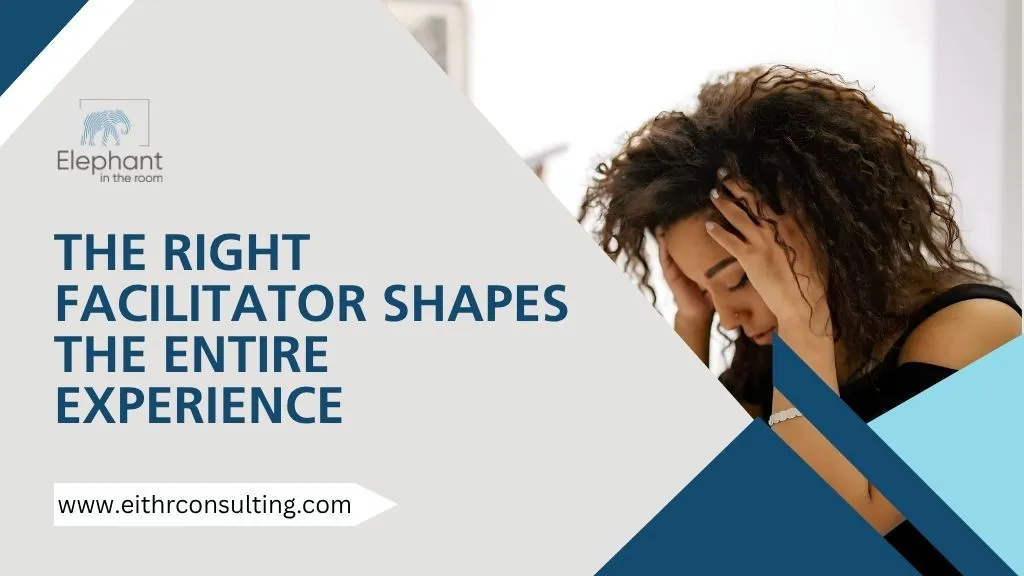
Why do some mental health workshops lead to visible changes in team behaviour while others are quickly forgotten? The difference often lies in the mental health facilitator and how effectively they connect concepts to real workplace situations.
While organisations invest in mental health training, the real challenge is not awareness but application. A strong facilitator goes beyond delivery, shaping how teams engage, reflect, and translate insights into consistent behaviour at work.
KEY TAKEAWAYS
- What does a good mental health facilitator do?
A good mental health facilitator connects concepts to real workplace behaviour rather than staying at a theoretical level. - What determines the effectiveness of a mental health workshop?
The effectiveness of a mental health workshop depends more on facilitation than on content alone. - What drives long-term impact in mental health training?
Practical application drives long-term impact more than motivation or awareness. - What happens when facilitation is weak?
Poor facilitation often results in low engagement and minimal behavioural change. - Why is evaluating facilitation important before training?
Evaluating facilitation ability is essential before investing in mental health training.
What Should Organisations Understand About the Role of a Mental Health Facilitator?
A mental health workshop is not experienced in isolation. Employees respond to how the session is conducted, not just what is presented.
If the facilitator cannot connect with the team or create a safe environment, participation becomes limited, and discussions remain surface-level. On the other hand, when a mental health facilitator aligns the session with real workplace challenges, employees begin to recognise their own behaviours within the discussion. This recognition is what drives engagement and application.
Key areas where facilitation directly influences workshop engagement, discussion quality and post-session application
- Engagement within the session
Employees participate more actively when discussions feel relevant to their actual work experiences rather than generic examples. - Psychological safety during conversations
A well-managed environment allows employees to share perspectives without hesitation, which improves the depth of discussion. - Application of mental health concepts in everyday workplace situations
Concepts are more likely to be applied in day-to-day workplace situations such as communication and team interactions, when they are clearly linked to real situations rather than presented as abstract ideas.
These factors highlight that facilitation is not just delivery. It is the process that determines whether the workshop creates real value.
Read More – Mental Health at Work That No One Talks About
What Are the 7 Things to Look For in a Mental Health Workshop Facilitator?
When evaluating a mental health facilitator, organisations should focus on observable behaviours rather than relying only on qualifications. The following qualities define whether a mental health workshop will lead to meaningful and practical outcomes.
1. Ability to translate mental health concepts into workplace situations
An effective facilitator consistently connects ideas from mental health training to everyday workplace realities such as workload pressure, communication gaps, or team conflict. This translation helps employees immediately see relevance, which increases both engagement and retention.
Without this connection, workshops often remain theoretical and fail to influence behaviour.
2. Ability to create psychological safety without forcing participation
A well-led mental health workshop encourages participation without making it feel mandatory.
A skilled mental health facilitator creates an environment where employees feel comfortable contributing while still respecting personal boundaries. This balance prevents resistance and allows engagement to develop naturally over the course of the session.
3. Awareness of team dynamics and ability to adapt in real time
Every team responds differently in a workshop setting, and a facilitator must be able to recognise and respond to these differences.
By observing patterns such as hesitation, dominant voices, or disengagement, the facilitator can adjust the structure of the session to maintain balanced participation. This adaptability ensures that discussions remain meaningful and inclusive.
4. Structured handling of sensitive and complex discussions
Mental health conversations can quickly become emotionally charged or difficult to navigate.
Thus, a strong mental health facilitator acknowledges these moments while maintaining clarity and direction. They ensure that discussions remain relevant to the group and do not become overly individualised, which helps maintain both safety and productivity.
5. Focus on reflection rather than passive information delivery
The purpose of a mental health workshop is not limited to awareness. It is to encourage reflection on behaviour and patterns.
A good facilitator guides employees to examine how their actions, reactions, and communication styles affect others within the team. This reflective process creates a deeper understanding and supports long-term change.
6. Ability to connect individual behaviour with team-level outcomes
An effective facilitator helps employees understand that individual behaviour does not exist in isolation.
For example, unmanaged stress or unclear communication can influence team dynamics, decision-making, and overall performance. By making this connection clear, the facilitator ensures that the workshop remains relevant to both individuals and the organisation.
7. Emphasis on practical application over temporary motivation
Motivation generated during a session is often short-lived, whereas practical application leads to sustained improvement.
A skilled mental health facilitator ensures that employees leave with clear, actionable steps that can be implemented in their daily work. This focus on application transforms the workshop from a one-time experience into a long-term behavioural shift.
How Can Organisations Evaluate a Mental Health Facilitator Before a Workshop?
Selecting the right facilitator requires a structured evaluation approach that goes beyond reviewing credentials. Organisations need to assess whether the facilitator can translate knowledge into practical workplace impact.
Evaluation criteria and what they indicate
| What to Evaluate | What It Indicates |
| How they handle real workplace scenarios | Ability to handle real team challenges |
| How they engage participants during the session | Comfort in managing group dynamics |
| How they handle sensitive discussions | Emotional awareness and control |
| How they translate discussions into practical outcomes | Practical value beyond the session |
Each of these criteria provides insight into how effectively the facilitator can deliver a mental health workshop that creates meaningful change. Without this evaluation, organisations risk selecting facilitators who are knowledgeable but not effective in practice.
If you are planning a mental health workshop, the facilitator you choose will directly influence how your team engages and applies what they learn. In many cases, discussing your requirements with a mental health consultant helps clarify what approach would work best for your teams.
What Are the Signs That a Mental Health Workshop Facilitator Is Not Effective?
When facilitation is not aligned with team needs, the impact of the workshop reduces significantly, even if the content itself is strong.
Common indicators of weak facilitation
- Limited participation during the session
- Surface-level discussions without meaningful depth
- Lack of connection to real workplace challenges
- Minimal behavioural change after the workshop
These patterns often result in employees viewing the workshop as a one-time activity rather than a valuable intervention. Over time, this reduces trust in the upcoming mental health training programs.
Read More – 7 Ways to Eliminate Communication Gaps at Your Workplace Without Increasing Costs
How Does the Right Mental Health Facilitator Improve Workplace Outcomes?
The impact of an effective mental health facilitator extends beyond the workshop itself and becomes visible in everyday team behaviour.
Employees begin to communicate more openly, address issues earlier, and handle pressure with greater clarity. These changes contribute to improved collaboration, stronger relationships, and more consistent performance.
How facilitator strengths translate into workplace outcomes
| Facilitator Strength | Workplace Outcome |
| Strong engagement approach | Higher participation |
| Clear communication style | Reduced misunderstandings |
| Practical focus | Better application of concepts |
| Emotional awareness | Improved team dynamics |
This relationship between facilitation and outcomes highlights why the success of a mental health workshop depends heavily on the facilitator’s approach rather than just the content.
Our Take – Improvements in communication or team behaviour are often attributed to the workshop itself, but in reality, they reflect how effectively the facilitator guides those conversations. When facilitation focuses on translating insights into everyday interactions, the impact becomes visible in how teams operate, not just how they participate.
Conclusion
A mental health workshop is only as effective as the person facilitating it. While content provides direction, the mental health facilitator determines how that content is understood and applied within a team.
For organisations investing in mental health training, selecting the right facilitator ensures that the workshop creates lasting value rather than becoming a routine activity. In situations where there is uncertainty about what approach would work best, discussing it with a mental health expert can often bring clarity to the next steps.
Frequently Asked Questions
1. What does a mental health facilitator do?
A mental health facilitator guides discussions in a mental health workshop while ensuring the environment remains safe and relevant. They help participants connect concepts to real workplace situations so the learning becomes practical, not just theoretical.
2. How is a facilitator different from a trainer?
A facilitator focuses on interaction, reflection, and group dynamics, while a trainer typically focuses on structured delivery. In mental health training, facilitation matters more because employees need to engage and reflect, not just listen.
3. What should organisations prioritise when selecting a facilitator?
Organisations should focus on practical experience, adaptability, and the ability to manage real team dynamics. A strong mental health facilitator ensures the mental health workshop leads to actual behavioural change, not just awareness.
4. Can mental health training be effective without the right facilitator?
In most cases, no. Even well-designed mental health training fails if facilitation lacks relevance or engagement. The facilitator is what turns knowledge into a real workplace application.
5. How can you measure workshop effectiveness?
Effectiveness can be seen through changes in communication, participation, and how teams handle challenges. A successful mental health workshop shows impact over time, not just in immediate feedback.
6. Why do some workshops fail to create impact?
Workshops often fail due to poor facilitation, lack of relevance, or low engagement. When employees cannot connect the session to real work situations, the mental health workshop becomes a one-time activity instead of a meaningful intervention.